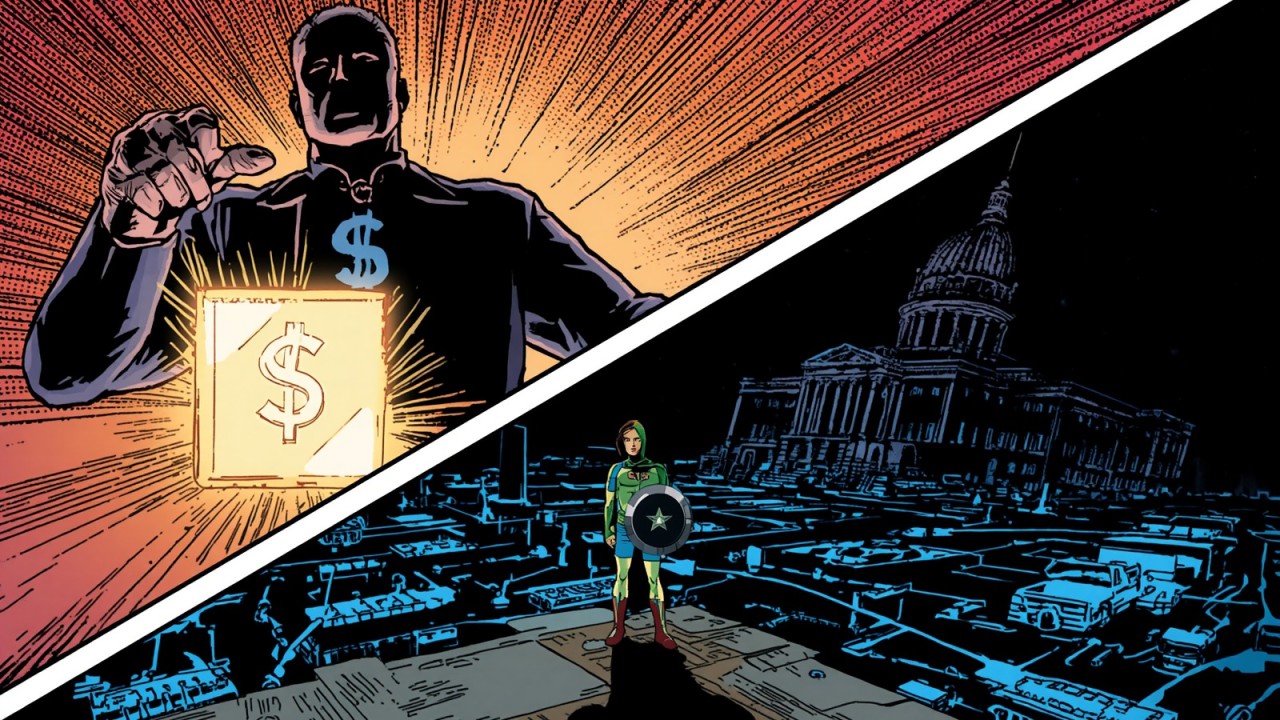
Salesforce acquired Contentful. And the US government ordered Anthropic to cut off access to its most advanced AI models for all non-American citizens. Overnight. Without warning.
Two different mechanisms. One identical outcome: European organizations lost access to tools they depend on because of decisions made in Washington and San Francisco that they had zero influence over.
This is what digital dependency looks like in practice. Not in a risk register. In production, on a Thursday evening, with no fallback.
This did not come out of nowhere
The Fable 5 shutdown is not an isolated incident. It is part of a pattern that has been building for years.
Email accounts of ICC judges in The Hague were shut down. Personal data of Dutch civil servants working on tech regulation was handed over without their knowledge or consent. And now, the most capable AI model available to European organizations was switched off based on a unilateral government decision that Anthropic had no practical way to challenge.
Ask yourself one question: who is stopping the same administration from disabling an Office 365 update for European government users if it decides that update creates a 2 percent efficiency gain for a regulatory body it does not like?
Nobody. They do it. And Big Tech complies.
The question every organization should be asking right now
Most organizations have never seriously asked themselves what happens if a critical piece of software simply stops working tomorrow. Not a planned migration. Not a negotiated transition. Switched off, overnight, by a decision made somewhere else entirely.
Three questions are worth running through honestly.
Which of our critical systems are we actually dependent on, not just using? Dependency means the business cannot function normally without it, not that switching away would be inconvenient.
Is my organization actually at risk? Risk is not the same for every company. A small local business has a different exposure than an enterprise with regulated data, government contracts, or operations that touch sanctioned jurisdictions. Be honest about where you sit.
What would the impact of a sudden loss actually be? Not in abstract terms. In hours of downtime, in revenue, in customer trust, in legal exposure.
What this means specifically for CMS and commerce
Apply that question to the systems that sit behind almost every digital business: the content platform and the commerce platform.
If your CMS disappeared tomorrow, your website disappears with it. No discoverability for potential customers searching for you. No access to resources your existing customers rely on, product documentation, downloads, support content, login portals. For B2B organizations in particular, this is where deals quietly stall, because the buyer cannot find the information they need at the moment they need it.
If your commerce platform disappeared tomorrow, the question becomes existential rather than operational. How much of your revenue actually flows through that platform? For organizations where online commerce is a meaningful or primary revenue channel, a sudden outage is not a technical incident. It is a direct hit to cash flow, with no guarantee of how quickly it gets resolved or what data survives the transition to an alternative.
Few organizations have actually quantified this. Most assume it will not happen to them, right up until a vendor decision, an acquisition, or a government order proves otherwise.
The Contentful acquisition: pattern recognition
Contentful was chosen by thousands of organizations specifically because it was not Salesforce. Clean API, no CRM bloat, developer-friendly, predictable pricing. That was the product.
Salesforce’s acquisition history tells you what comes next. MuleSoft, 2018. Tableau, 2019. Slack, 2021. Each came with promises of independence. Each changed, in pricing, in roadmap, in the degree to which it remained the product that was originally chosen.
Contentful will follow the same arc. That is not pessimism. It is pattern recognition.
Three ways to actually reduce this risk
Once you know where the exposure sits, there are three meaningful responses.
Redundancy. Running parallel systems or maintaining the capability to switch vendors at short notice. Expensive and complex, but the highest resilience.
Contractual protection. Data portability clauses, exit terms, SLA commitments with real financial consequences. Not a substitute for technical resilience but a meaningful reduction in commercial risk.
Platform choice. Selecting platforms where the fundamental risk profile is different. Open source software under MIT or Apache licensing cannot be acquired. It cannot be shut down by a government export order. It cannot be repriced unilaterally. The code exists and will continue to exist regardless of what happens to any company or any administration.
What the alternative looks like in content and commerce
Sulu is a modern PHP CMS built on Symfony. Multi-site governance, structured content, complex editorial workflows at enterprise scale. MIT licensed, actively maintained, and carrying no acquisition risk because no single commercial entity controls it.
Sylius is the open source commerce platform, also built on Symfony. API-first, highly customizable, designed for organizations whose commerce logic does not fit neatly into a SaaS platform’s opinionated data model. Also MIT licensed.
Together they cover what most organizations are using Contentful and a commercial commerce platform for, at a fraction of the licensing cost, with full data ownership, and without dependency on any vendor’s commercial decisions or any government’s political ones.
The honest take
I am not arguing that European organizations should stop using American software. The products are often excellent and the ecosystem advantages are real.
I am arguing that every organization should be able to answer the three questions above for its critical systems, today, before a vendor decision or a government order forces the answer on them. The events of this week are not anomalies. They are signals. And the gap between the organizations making deliberate decisions about this now and the ones waiting to be surprised is growing.
At diagema, the Sovereign Commerce Stack built on Sulu and Sylius is where we put that conviction into practice. If this self-assessment raised more questions than answers for your organization, that is exactly the conversation worth having now.
#DigitalSovereignty #DACH #OpenSource #Sulu #Sylius #Contentful #Salesforce #CloudStrategy #AI #TechStrategy #diagema
Ursprünglich veröffentlicht auf LinkedIn.